How Water Damage Insurance Claims Work in BC
Water damage insurance claims in BC can be straightforward — or they can turn into months-long disputes. The difference almost always comes down to documentation, how quickly you reported the claim and whether you worked with a restoration company that produces adjuster-ready paperwork.
What standard homeowner policies cover
Most standard homeowner insurance policies in British Columbia cover sudden and accidental water damage from internal sources. This includes:
- Burst supply pipes — including freeze-burst events in cold weather
- Appliance failures — washing machines, dishwashers, refrigerator icemakers, hot water tanks
- Roof damage from sudden events (storm damage, falling tree, sudden mechanical failure)
- Accidental overflow from bathtubs, sinks and toilets
What standard policies typically do NOT cover
These exclusions catch many BC homeowners by surprise:
- Overland flooding: Water that enters from surface sources (rivers, creeks, storm drains overflowing) is excluded from standard policies. You need a separate Overland Water endorsement. Many BC homeowners added this after the 2021 Atmospheric River floods.
- Sewer backup: Backup from the municipal sanitary system is typically excluded unless you have a Sewer Backup endorsement.
- Gradual leaks: Water damage from a leak that's been developing for weeks or months is generally excluded as a "maintenance issue." Only sudden events are covered.
- Mold from delayed reporting: If you knew about water damage and didn't report it, the insurer may exclude mold costs on the basis that the damage was allowed to worsen.
The documentation your adjuster needs
This is where most claims get bogged down. Adjusters need specific documentation to approve restoration costs:
- Cause of loss documentation: Photos of the failed pipe, appliance, or entry point. A description of when the event occurred and how it was discovered.
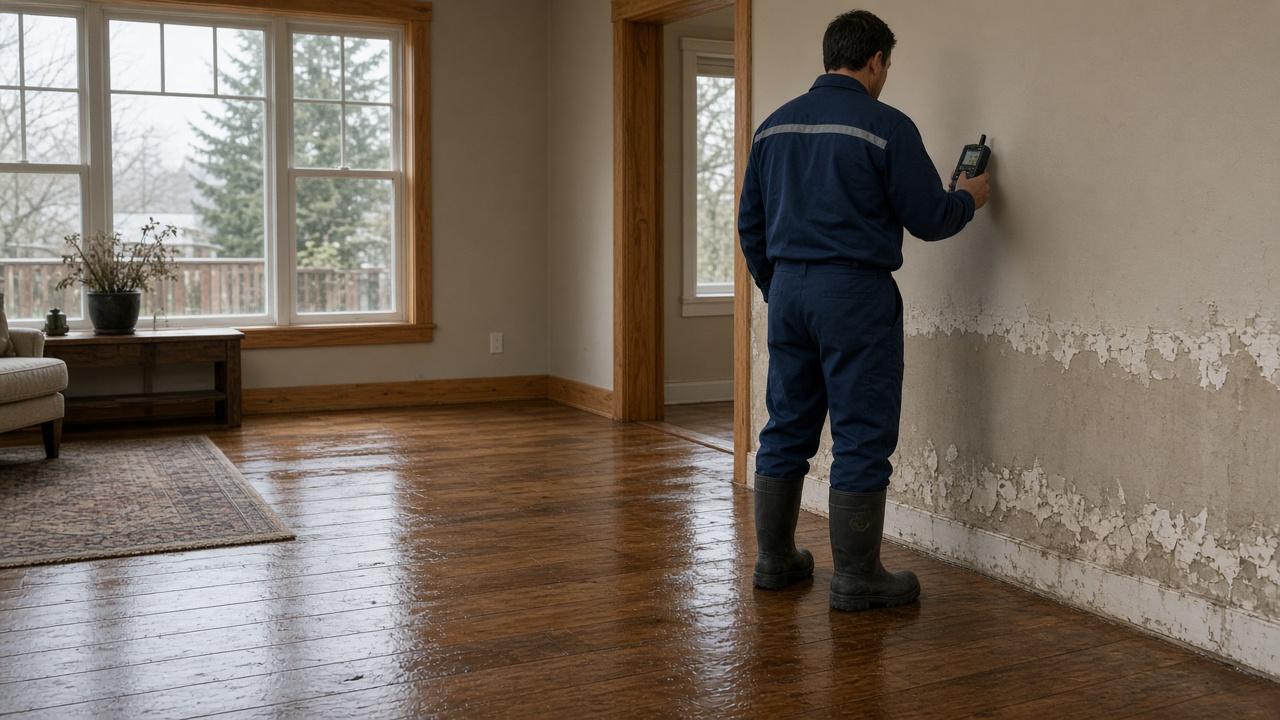
- Initial moisture mapping: Thermal images and moisture meter readings showing the extent of saturation at day one. This is the baseline that justifies the restoration scope.
- Material removal documentation: Photos and descriptions of every material removed, including contamination category and quantity.
- Daily drying logs: Temperature, relative humidity and moisture readings taken daily during the drying phase. This is the proof that professional drying protocol was followed.
- Post-drying clearance readings: Final moisture readings confirming the structure returned to normal ranges before reconstruction began.
Common mistakes that delay or reduce claims
- Not reporting immediately. Most policies require "prompt" reporting. Waiting several days to report a water event gives the insurer grounds to reduce or deny the claim.
- Doing the cleanup yourself. DIY water cleanup typically doesn't produce the documentation adjusters need. It also often misses hidden moisture that creates mold problems later — and those later problems may not be covered because the original event was "already addressed."
- Authorizing reconstruction before the restoration is documented. If you start rebuilding before the restoration company has produced clearance documentation, adjusters may dispute whether proper drying was performed.
- Throwing away damaged materials before documentation. Every removed material needs to be photographed and described before disposal.
How to work with your adjuster efficiently
When you use a restoration company that produces proper documentation, the adjuster's job is easier and your claim moves faster. The adjuster needs to confirm the cause of loss, the scope of damage and the appropriateness of the restoration costs. A complete documentation package from a certified restoration contractor answers all of those questions.
We communicate directly with adjusters on the technical questions about restoration protocol — you shouldn't need to be the intermediary explaining why a specific piece of equipment was used or what a psychrometric log is.
Abbotsford Water Damage Services handles insurance documentation on every job. If you've had water damage in Abbotsford or the Fraser Valley and you're dealing with a claim, call us.
← Back to Water Damage Guides · Abbotsford Water Damage Services Team
Water damage in Abbotsford? Call now.
The sooner you call, the more we can save. Standing water damages faster than most people realize — don't wait until tomorrow.
Serving Abbotsford and all of the Fraser Valley — IICRC Certified · Licensed & Insured