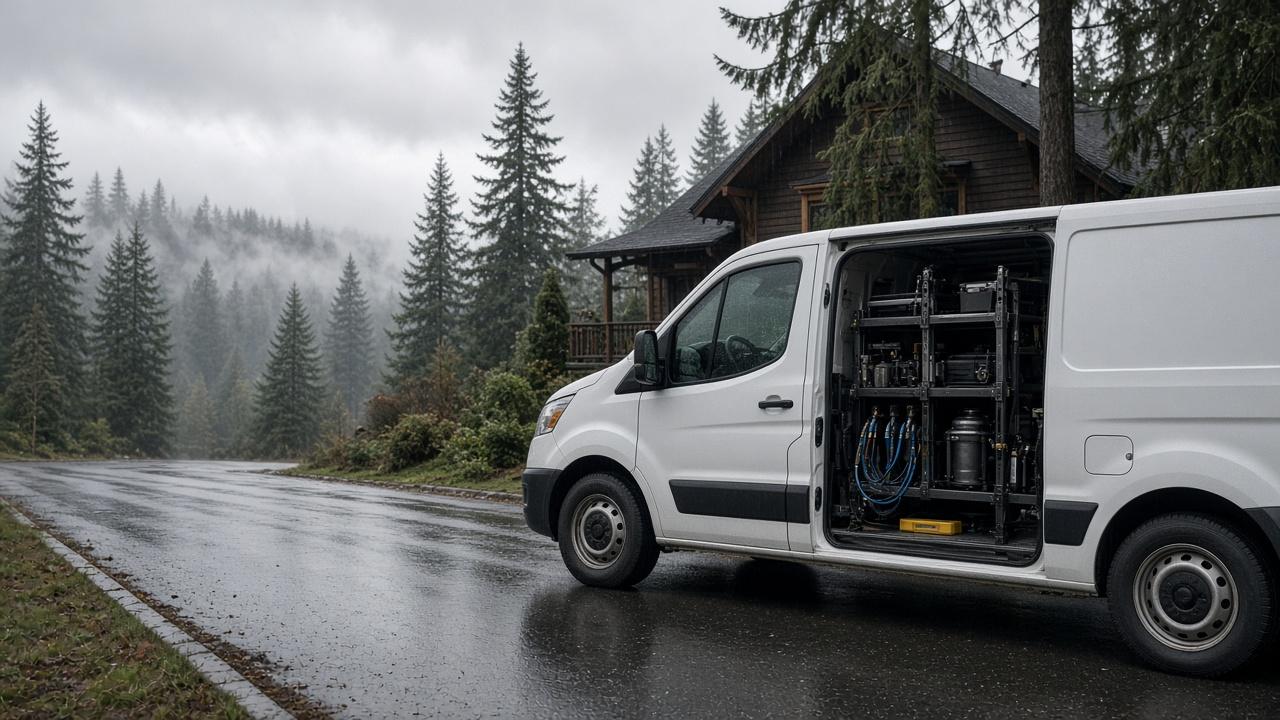
What to Do Immediately After Your Basement Floods
A flooded basement triggers a panic response in most homeowners — and understandably so. But the actions you take in the first 60 minutes can be the difference between a three-day dry-out and a three-week rebuild. Here's what to actually do.
Step 1: Turn off the water source (if you can do it safely)
If the flooding is from an internal source — burst pipe, appliance failure, backed-up drain — your first job is to stop the flow. Locate the shutoff valve for the affected line or go to the main shutoff at the perimeter of your home.
If you can't identify the source or the shutoff location, call us. We can walk you through it while we're en route.
If the flooding is from external water (storm drain, surface runoff) there's no shutoff — skip to Step 2.
Step 2: Don't run household fans — yet
This is the most common mistake we see. People grab box fans and point them at the wet floor. The problem: if the water source is a backed-up drain, a floor drain overflow or floodwater from outside, that water may be Category 2 or Category 3 — meaning it contains contaminants. Fans spread contaminated air through your home and can aerosolize pathogens.
Wait until the restoration crew arrives and assesses the water category. If it's confirmed Category 1 (clean supply water), limited airflow is fine. If it's Category 2 or 3, wait for professional air management equipment.
Step 3: Document everything before touching anything
Pull out your phone and take photos and video of everything — the water level, the visible source, the affected rooms, any contents that are damaged. Walk the whole affected area. This documentation is the foundation of your insurance claim.
Your insurer may want to see the condition before any cleanup begins. If you've already extracted the water and moved contents when the adjuster calls, you need that photo record to prove what the initial condition was.
Step 4: Move valuables out of the wet area (if it's safe)
Move anything valuable, irreplaceable or electronically sensitive to a dry area — but only if you can do this safely without standing in water near electrical outlets or panels. Turn off the circuit breakers for the basement if the electrical panel is in a dry area you can safely reach.
Don't wade through standing water if you're uncertain about electrical safety. Call us and wait.
Step 5: Call your insurance company and call us
These two calls happen simultaneously, not sequentially. Call us for emergency dispatch — water damage mitigation doesn't wait for insurance authorization. Call your insurer to open a claim — most policies require you to notify them promptly, and emergency mitigation expenses are typically pre-authorized.
When you call us, have ready: the apparent source of the water, an estimate of the water level, how long it's been flooding and any visible mold or sewage contamination.
What NOT to do
- Don't use a wet-vac to extract more than a few litres. Household wet-vacs aren't designed for significant water extraction and will take far too long. You need truck-mounted extraction equipment.
- Don't pull up flooring yourself. We assess whether flooring can be dried in place before removing it — premature removal can increase your claim costs.
- Don't run the furnace or HVAC. If the water is contaminated, HVAC systems spread that contamination through the whole house.
- Don't wait to see if it dries on its own. It won't. The structure will stay wet, mold will start within 24-48 hours, and the job will get more expensive every day.
The clock matters more than most people realize
Here's what the IICRC's research shows about water damage progression by time:
- 0-1 hours: Category 1 clean water. Most materials can be dried in place. Minimal structural impact.
- 1-24 hours: Drywall begins to soften and lose structural integrity. Wood begins to swell. Category 1 water degrades to Category 2.
- 24-48 hours: Mold colonization risk begins. Structural wood saturation increases. Category 2 water may degrade to Category 3.
- 48+ hours: Mold growth active on organic materials. Significant structural drying required. Increased probability of material replacement versus in-place drying.
The economics of speed are straightforward: a job that costs X at hour one typically costs 2-3X by day three and can cost 5X or more by day seven if mold remediation has been added to the scope.
Call Abbotsford Water Damage Services the moment you discover basement flooding in Abbotsford or anywhere in the Fraser Valley. We dispatch fast because we know what the clock costs you.
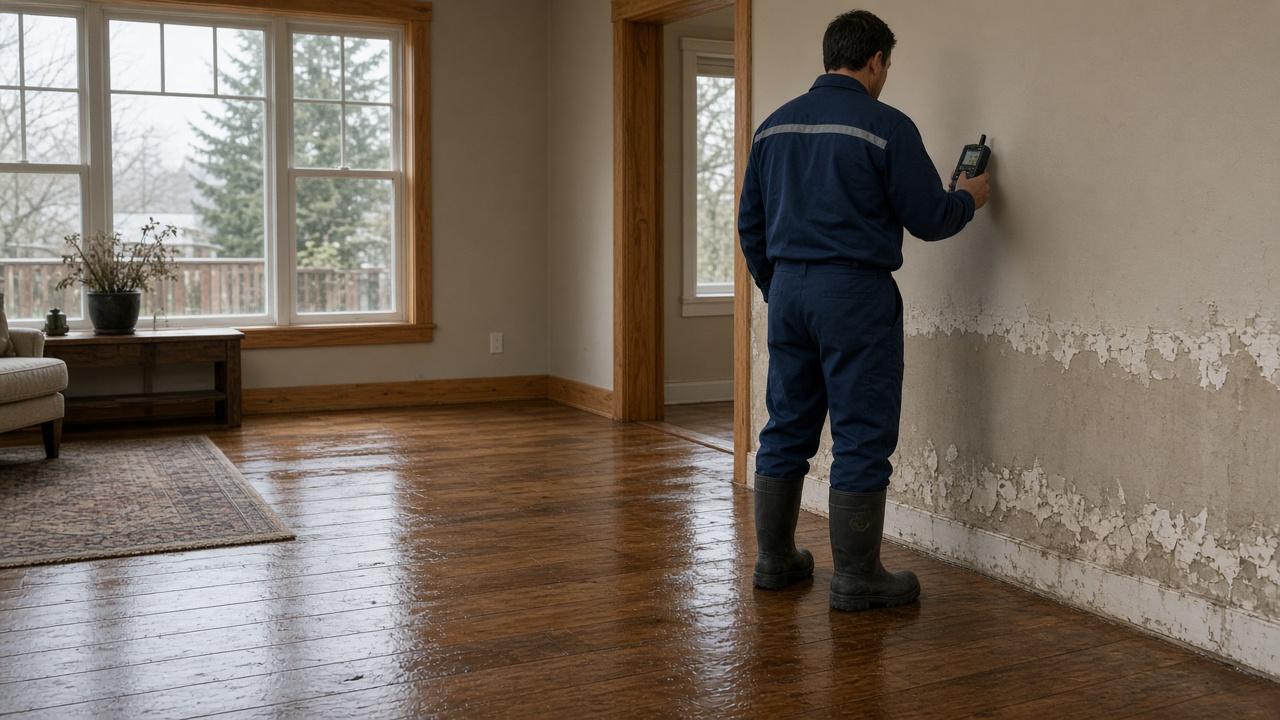
Water damage in Abbotsford? Call now.
The sooner you call, the more we can save. Standing water damages faster than most people realize — don't wait until tomorrow.
Serving Abbotsford and all of the Fraser Valley — IICRC Certified · Licensed & Insured